
 Durgesh Sagar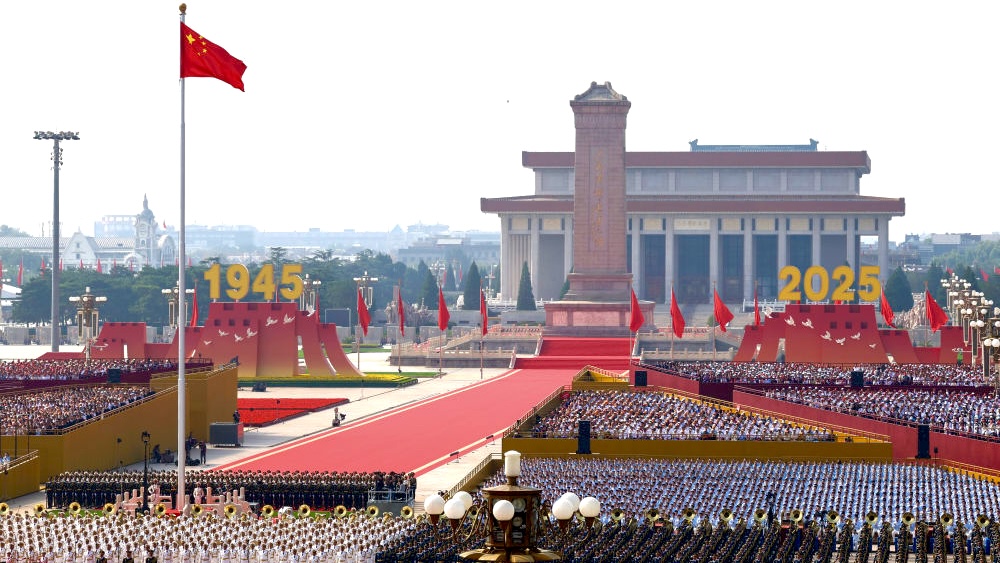
On September 3, 2025, Beijing turned into the epicenter of a carefully choreographed display of national pride, military might, and global messaging. The occasion was the 80th anniversary of the victory in the War of Resistance Against Japanese Aggression and World War II in Asia—an event China commemorates as a cornerstone of its modern identity.
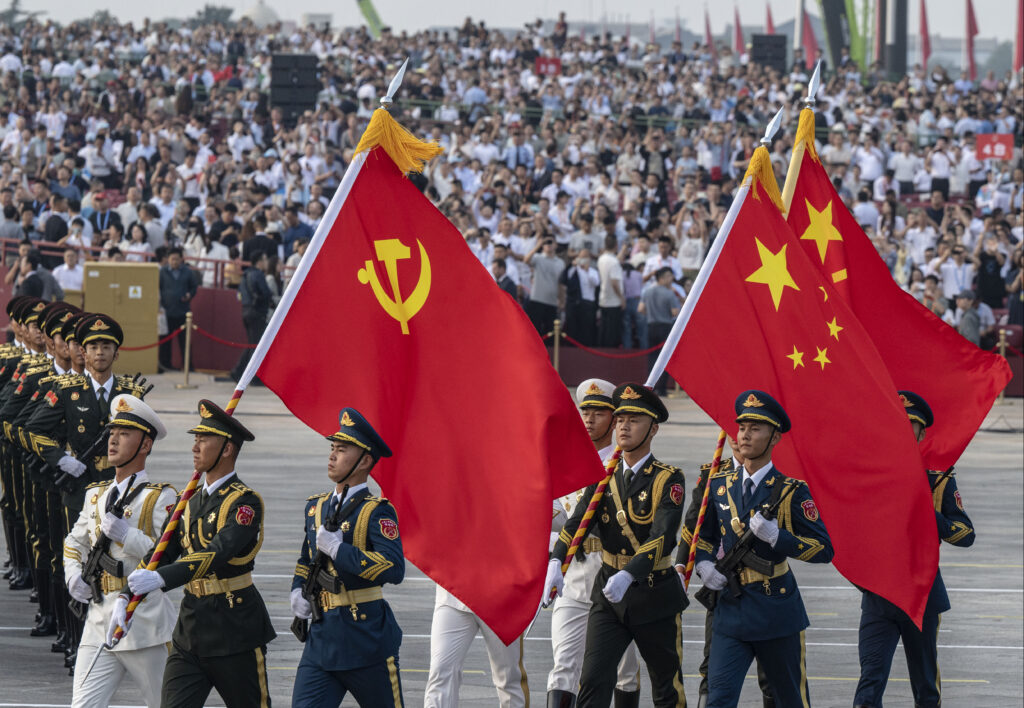
The Victory Day parade at Tiananmen Square was more than a military showcase; it was a statement of how far China has come since its days of foreign occupation, and where it intends to head in the years to come. With over 12,000 troops, rows of high-tech weaponry, appearances by global leaders, and President Xi Jinping’s fiery speech, the parade was equal parts memorial, theatre, and geopolitical declaration.
Let’s take a closer look at what unfolded and why it matters.
Remembering the Past, Projecting the Future
The 80th anniversary was symbolically significant. It honored the sacrifices of millions of Chinese soldiers and civilians who fought during the Second World War, while linking that legacy to today’s vision of a “rejuvenated China.”
The parade began promptly at 9 a.m., with formations of soldiers marching in perfect symmetry down Chang’an Avenue. Towering structures in the backdrop displayed the numbers “1945–2025,” alongside motifs of the Great Wall—visually binding history with destiny.
President Xi Jinping’s keynote speech was perhaps the most closely watched moment. He praised the resilience of the Chinese people, declared that China now “stands firmly on the right side of history,” and emphasized that the nation’s rejuvenation is “unstoppable.” His words resonated with domestic audiences, serving as both reassurance and warning: China will not be deterred in its path toward great power status.
Weapons on Display: A Modern Arsenal
If the speeches evoked history, the hardware on show projected the future. The parade showcased an arsenal of cutting-edge systems, many never before displayed publicly.

Highlights included:
- Hypersonic and anti-ship missiles, such as the Yingji-17/19/20, capable of targeting adversaries at incredible speeds.
- Components of China’s nuclear triad: long-range missiles like DF-31 and DF-61, the Julang-3 submarine-launched ballistic missile, and the Jinglei-1 nuclear-capable cruise missile, together signaling China’s maturing deterrence strategy.
- Naval-focused weaponry, from HHQ-9C and HQ-16C surface-to-air systems to unmanned underwater vehicles (XLUUVs) designed to patrol the seas.
- AI-powered tanks and drones, alongside anti-drone laser weapons, showing Beijing’s investment in future warfare domains.
Observers noted that the maritime emphasis was especially striking, highlighting China’s ongoing disputes in the South China Sea and its ambition to dominate regional waters.
A Stage for Diplomacy
Perhaps equally important as the missiles were the guests seated alongside Xi. On the reviewing stand stood Russian President Vladimir Putin and North Korean leader Kim Jong Un, both smiling, waving, and reinforcing the optics of a new bloc of powers challenging Western dominance.
The guest list extended beyond Moscow and Pyongyang. Over 25 leaders from Asia, Africa, the Middle East, and Latin America attended—including figures from Iran, Belarus, and Cuba. Their presence underlined China’s growing rapport with the Global South and its message that Beijing offers an alternative to U.S.-led institutions.
Noticeably absent were major Western leaders. The United States, Japan, and most European countries kept their distance, signaling ongoing tensions with Beijing’s assertive policies. This absence, however, only amplified the contrast China sought to highlight: the parade was not only a commemoration but also a gathering of like-minded partners carving out a parallel world order.
The Message Beneath the March
While Xi’s speech struck notes of peace and historical memory, the symbolism of the event was far from subtle. The juxtaposition of nuclear missiles and foreign dignitaries was a deliberate reminder that China has both the means and partnerships to shape global affairs.
Western analysts described the spectacle as part of a broader narrative—a China-led “axis of upheaval” that includes Russia, North Korea, and sympathetic states in Africa and Latin America. Together, they represent a coalition willing to challenge Western hegemony and rewrite the rules of international engagement.
Still, caution abounds. Commentators stressed that such alliances, though visually powerful, are fragile. Internal tensions, economic challenges, and strategic divergences could limit their effectiveness. The parade, therefore, was as much about perception as reality.
Nationalism Under the Spotlight
For many Chinese citizens, however, the global implications were secondary to the pride instilled by the event. The meticulous choreography, patriotic slogans, and display of military prowess reinforced the narrative of national restoration.
Yet, some Western observers criticized the atmosphere as “cold efficiency”—grand but impersonal. Compared to parades elsewhere that feature more spontaneous public participation, China’s tightly controlled spectacle reflected the Communist Party’s preference for discipline and ideology over emotion.
Nonetheless, the intended audience at home saw the message clearly: under the Party’s leadership, China has transformed from a once-battered nation into a formidable world power.
Why It Matters Globally
China’s 80th Victory Day parade matters for reasons beyond symbolism:
- Military Signaling – The unveiling of advanced weapons, particularly nuclear and naval systems, underscores Beijing’s determination to modernize its forces rapidly and deter rivals.
- Geopolitical Alliances – The optics of Xi, Putin, and Kim together reinforced fears of a new axis that could reshape conflicts from Ukraine to the Indo-Pacific.
- Global South Diplomacy – By drawing leaders from Africa, Asia, and Latin America, China positioned itself as a champion of alternative development and governance models.
- Domestic Legitimacy – At home, the parade reinforced Xi’s narrative of national rejuvenation, consolidating support ahead of a politically sensitive period.
Closing Thoughts
The 80th Victory Day parade in Beijing was more than a commemoration of the past. It was a bold declaration of the future China envisions—a future where its military, its alliances, and its ideology play a defining role in global affairs.
Through a blend of solemn remembrance and technological spectacle, Xi Jinping sought to remind both domestic and international audiences that China is no longer a victim of history but a shaper of it.
Whether this vision leads to cooperation or confrontation with the rest of the world remains to be seen. But one thing is clear: the 2025 parade will be remembered not just as a moment of national pride but as a turning point in China’s global narrative.
About the Author