
Skyroot Vikram-1 Launch: Everything You Need to Know About India’s First Private Orbital Rocket Mission
 Durgesh Sagar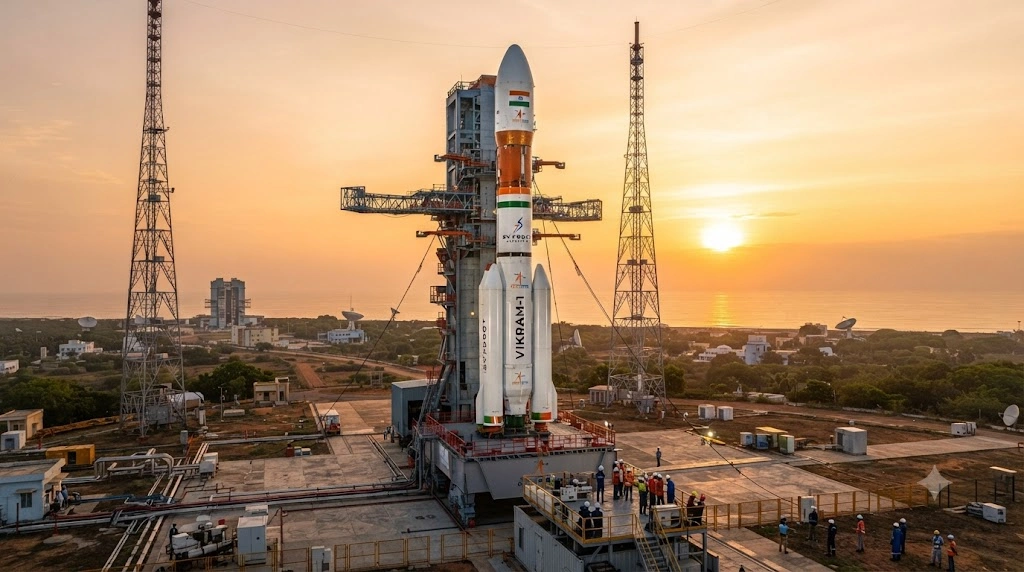
Skyroot Vikram-1 Launch
India’s space industry is entering a new era with the launch of Vikram-1, the first privately developed orbital launch vehicle by Skyroot Aerospace. The mission represents more than just another rocket launch—it reflects India’s growing private space ecosystem and the country’s ambition to become a global leader in commercial space services.
Following the successful launch of the Vikram-S suborbital rocket in 2022, Skyroot Aerospace has now taken a much bigger step by developing Vikram-1, an orbital launch vehicle capable of placing satellites into Low Earth Orbit (LEO). The mission is being closely watched by the global aerospace industry, investors, and satellite companies because it could open a new chapter for India’s commercial launch capabilities.
What is Vikram-1?
Vikram-1 is a three-stage orbital launch vehicle developed by Hyderabad-based startup Skyroot Aerospace. It is designed to launch small satellites into Low Earth Orbit efficiently and at a competitive cost.
The rocket has been named in honor of Dr. Vikram Sarabhai, widely regarded as the father of India’s space programme.
Unlike traditional government-led missions, Vikram-1 has been designed, engineered, and developed by a private Indian company, making it a landmark achievement for the country’s rapidly expanding space startup ecosystem.
About Skyroot Aerospace
Skyroot Aerospace was founded in 2018 by former ISRO scientists with the vision of making satellite launches more affordable, flexible, and accessible.
The company has quickly emerged as one of India’s leading private space startups.
Major achievements include:
- Successful launch of Vikram-S in 2022
- Development of India’s first private orbital launch vehicle
- Advanced 3D-printed rocket engine technology
- Carbon composite rocket structures
- Partnerships with government and private organizations
The company operates under the regulatory framework introduced after India opened its space sector to private participation.
Why is Vikram-1 Important?
The Vikram-1 mission is important for several reasons.
1. India’s First Private Orbital Rocket
While ISRO has successfully launched hundreds of satellites over the years, Vikram-1 represents the first attempt by a private Indian company to place payloads into orbit.
2. Boost to India’s Space Economy
India aims to significantly expand its share of the global space economy over the coming years. Private launch providers like Skyroot are expected to play a key role in achieving that goal.
3. Faster Satellite Launches
Many startups, universities, and commercial companies require dedicated launches for small satellites. Vikram-1 aims to provide flexible launch opportunities without waiting for larger missions.
4. Global Competition
Skyroot will compete with several international launch providers that specialize in launching small satellites. A successful mission could strengthen India’s position in the commercial launch market.
Vikram-1 Mission Objectives
The primary objectives of the Vikram-1 mission include:
- Demonstrate orbital launch capability
- Validate launch vehicle systems
- Test propulsion and guidance systems
- Deploy customer payloads into orbit
- Build confidence in India’s private launch ecosystem
Success would establish Skyroot Aerospace as one of the few private companies globally capable of independently reaching orbit.
Key Features of Vikram-1
Some notable features of the launch vehicle include:
- Three-stage solid propulsion system
- Lightweight carbon composite structures
- Advanced avionics
- Precision guidance and navigation systems
- High-performance rocket engines
- Modern manufacturing techniques, including 3D printing for selected components
These technologies are designed to improve efficiency while reducing production costs.
Payload Capacity
Vikram-1 has been developed primarily for launching small satellites.
Its target market includes:
- Earth observation satellites
- Communication satellites
- Scientific payloads
- Technology demonstration missions
- University satellites
- Commercial CubeSats
As demand for small satellite launches continues to grow worldwide, dedicated launch vehicles like Vikram-1 are becoming increasingly important.
How is Vikram-1 Different from ISRO Rockets?
Although both aim to place satellites into orbit, their objectives differ.
ISRO launch vehicles are designed for a wide range of national and international missions, including planetary exploration, navigation satellites, communication systems, and scientific research.
Vikram-1, on the other hand, focuses on serving the commercial small-satellite market by offering dedicated launch opportunities with greater scheduling flexibility.
Rather than replacing ISRO, private launch companies are expected to complement India’s existing space capabilities.
Impact on India’s Private Space Industry
The opening of India’s space sector has encouraged innovation, investment, and entrepreneurship.
A successful Vikram-1 mission could:
- Increase investor confidence
- Encourage more startups to enter the space sector
- Create high-skilled jobs
- Expand India’s commercial launch capacity
- Strengthen collaboration between government agencies and private companies
It would also demonstrate that Indian startups can build sophisticated aerospace technologies capable of competing internationally.
Challenges Ahead
Despite the excitement, orbital launches remain extremely challenging.
Skyroot Aerospace must ensure:
- Reliable propulsion performance
- Accurate guidance and navigation
- Stage separation success
- Payload deployment accuracy
- Mission safety
Even globally, many private launch companies have required multiple attempts before achieving consistent success. Regardless of the outcome of the first mission, the experience gained will contribute to future improvements.
Future Plans
Skyroot Aerospace has indicated ambitions beyond a single launch.
Future goals include:
- Increasing launch frequency
- Supporting commercial satellite operators
- Developing more advanced launch vehicles
- Expanding international customer partnerships
- Contributing to India’s growing role in the global space economy
As demand for small satellite launches continues to rise, the company aims to become a reliable launch service provider for customers around the world.
What This Means for India
The Vikram-1 mission symbolizes a broader transformation in India’s innovation landscape.
The country is witnessing rapid growth in sectors such as:
- Space technology
- Artificial intelligence
- Semiconductor manufacturing
- Defence technology
- Electric mobility
Private companies are increasingly complementing government initiatives, creating new opportunities for research, investment, and technological advancement.
If Vikram-1 achieves its objectives, it could become one of the defining milestones in the evolution of India’s commercial space industry.
Conclusion
Skyroot Aerospace’s Vikram-1 is more than just a rocket—it represents the emergence of India’s private space capabilities on the global stage. Developed by a homegrown startup founded by former ISRO scientists, the mission demonstrates how innovation and private enterprise are reshaping the country’s aerospace sector.
Whether viewed from a technological, economic, or strategic perspective, Vikram-1 has the potential to become a landmark achievement for India’s commercial space journey. As the world watches the mission unfold, its success could pave the way for a new generation of Indian space startups and position the country as a stronger player in the rapidly expanding global space market.
Frequently Asked Questions (FAQs)
What is Vikram-1?
Vikram-1 is India’s first privately developed orbital launch vehicle created by Skyroot Aerospace.
Who developed Vikram-1?
The rocket has been developed by Hyderabad-based aerospace startup Skyroot Aerospace.
Why is Vikram-1 important?
It marks a significant milestone for India’s private space industry and aims to provide commercial launch services for small satellites.
What kind of satellites can Vikram-1 launch?
The vehicle is designed primarily for small satellites, including CubeSats, Earth observation satellites, research payloads, and commercial spacecraft.
How is Vikram-1 different from ISRO rockets?
ISRO focuses on national and scientific missions, while Vikram-1 targets the growing commercial small-satellite launch market.
About the Author